✓ PMC Verified
⭐ 4.9 Rating

PRP for Hair Loss Karachi – Results, Cost & Guide
Thinking about PRP for hair loss Karachi? Learn how it works, realistic results, and expert advice from Dr. Hina Sohail before you decide.
PRP for hair loss Karachi is becoming one of the most searched treatments for people dealing with thinning hair, hair fall, and early hair loss. If you live in Karachi, humidity, dust, stress, lifestyle changes, and pollution can all affect hair health. If you’ve noticed thinning at the temples, a widening part, or more hair on your pillow, you are not alone.
In your search for a solution, you may have come across PRP for hair loss. PRP, also known as Platelet-Rich Plasma, is one of the most requested hair loss treatments in Karachi. But with so many clinics and beauty centers offering it, it is important to understand what is real science and what is just marketing.
This guide explains how PRP for hair loss Karachi works, who it may help, what results are realistic, and when you should consult a qualified dermatologist.
Table of Contents- What Is PRP for Hair Loss Karachi?
- Does PRP Actually Work?
- Who Is the Ideal Candidate?
- What Happens During a PRP Session?
- When Will You See Results?
- PRP Hair Treatment Cost in Karachi
- PRP at Skin Studio by Dr Hina Sohail
- FAQs
- Book Consultation
What Is PRP for Hair Loss Karachi and How Does It Work?
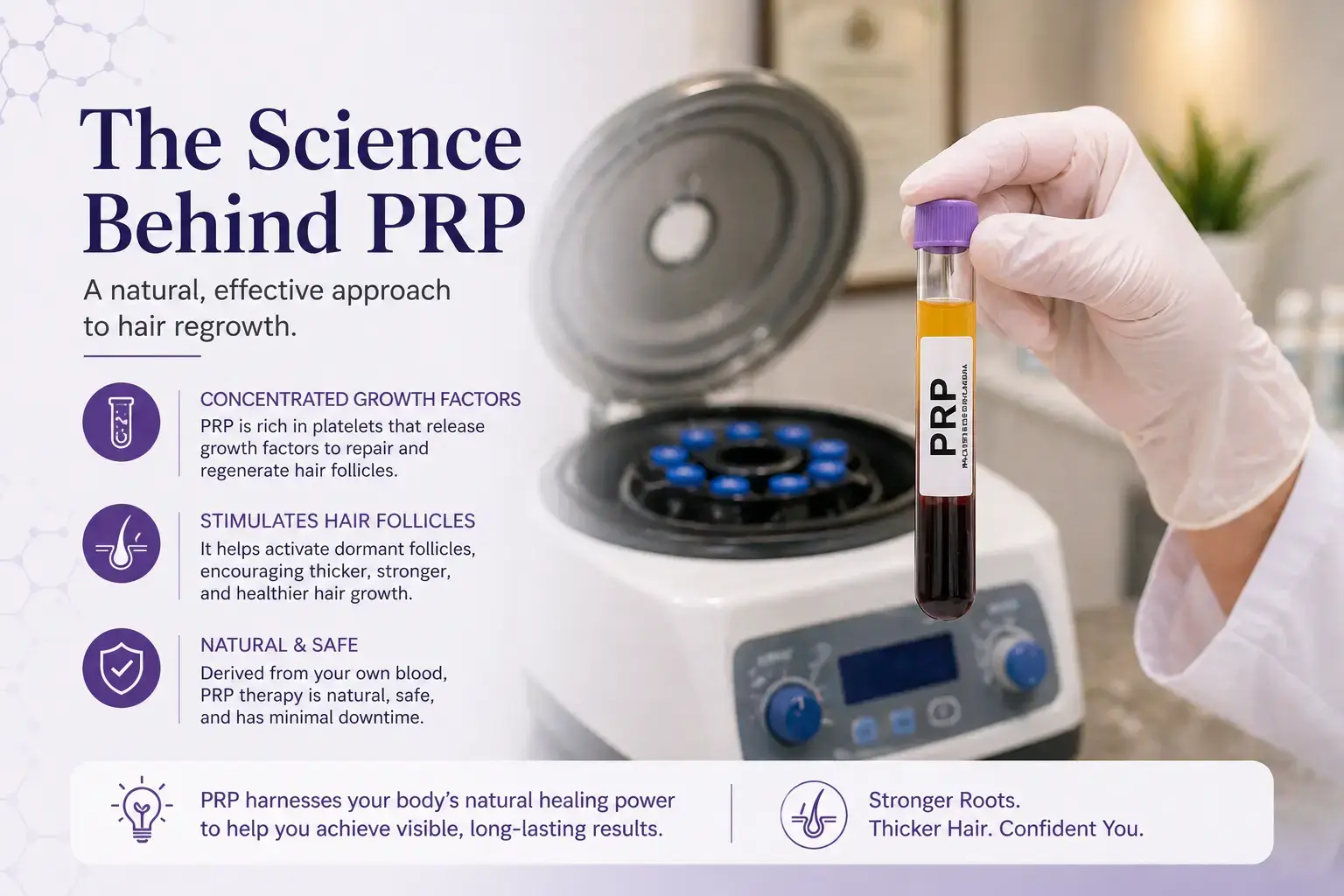
PRP stands for Platelet-Rich Plasma. It is a treatment that uses a concentrated part of your own blood to support weak or thinning hair follicles.
Your blood contains platelets, which are rich in growth factors. These growth factors help with healing, tissue repair, and cell regeneration. In PRP hair treatment, these platelets are separated and concentrated before being injected into areas of the scalp where hair thinning is visible.
The goal of PRP for hair loss Karachi is to deliver concentrated growth factors directly to weakened hair follicles so they may become stronger and healthier over time.
The PRP process usually includes:
- A small amount of blood is drawn, similar to a routine blood test.
- The blood is placed in a centrifuge machine.
- The centrifuge separates the platelet-rich plasma from other blood components.
- The PRP is injected into targeted areas of the scalp.
Does PRP Actually Work for Hair Loss?
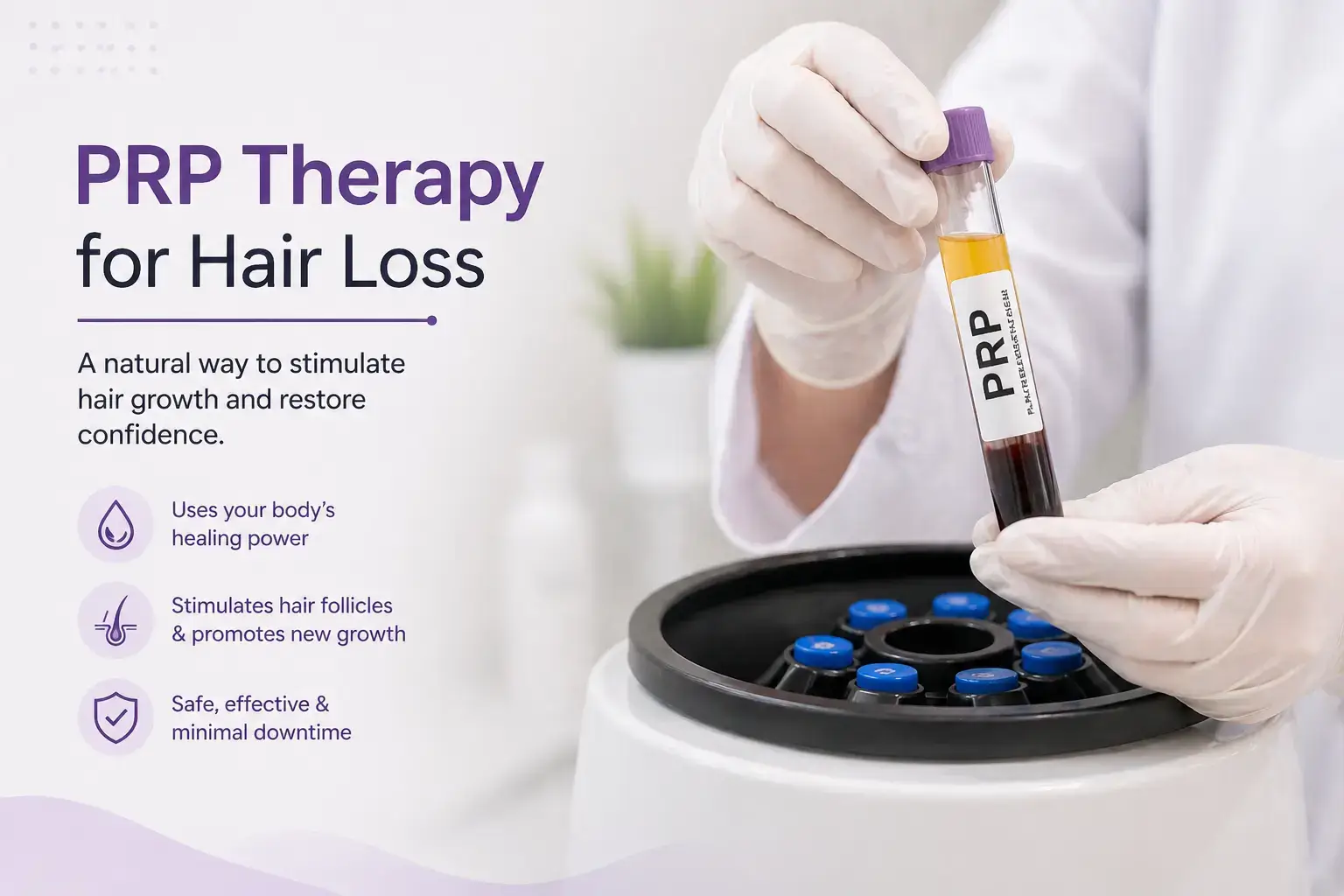
The honest answer is: yes, PRP can work for the right patients. However, it is not a miracle cure and it does not produce overnight results.
For patients comparing hair loss options, PRP for hair loss Karachi can be a helpful treatment to discuss during a dermatologist-led consultation.
If you are considering PRP for hair loss Karachi, it is important to understand whether your hair follicles are still active and can respond to treatment.
PRP can help with:
- Reducing ongoing hair fall
- Strengthening existing hair
- Improving hair thickness
- Supporting weak or miniaturised follicles
- Improving overall scalp health
- Increasing the appearance of hair density over time
PRP cannot:
- Regrow hair from follicles that have been completely inactive for years
- Reverse advanced baldness completely
- Replace a hair transplant when follicles no longer exist
- Give instant results after one session
PRP works best when hair follicles are still present but weakened. That is why early treatment matters. The earlier hair thinning is assessed, the better the chance of saving and strengthening existing follicles.
Who Is the Ideal Candidate for PRP?
PRP for hair loss Karachi is not suitable for every case of hair loss. It is usually best for patients with early to moderate thinning, where the follicles are still active but becoming weak.
PRP may be suitable for:
- Men and women with early to moderate hair thinning
- Patients with androgenetic alopecia, also known as male or female pattern hair loss
- People experiencing increased hair fall due to stress, nutritional deficiencies, hormonal changes, or postpartum recovery
- Patients with thinning hair after illness or lifestyle stress
- People who want to strengthen existing hair before hair loss progresses further
PRP may be less effective for:
- Advanced or long-standing complete baldness
- Areas where follicles are no longer functional
- Active scalp infections
- Certain autoimmune scalp conditions
This is why consultation matters. A dermatologist can assess your scalp, understand the cause of hair loss, and guide whether PRP is likely to help in your case.
What Happens During a PRP Session?
Many patients feel nervous about the procedure, especially because injections are involved. In a professional clinic setting, the process is usually straightforward and well tolerated.
Before the session
Your scalp and hair loss pattern are assessed. Your medical history may also be reviewed to understand possible causes of hair fall and whether PRP is suitable for you.
During the session
- A small blood sample is taken from your arm.
- The blood is processed in a centrifuge for around 10–15 minutes.
- The scalp may be numbed to reduce discomfort.
- PRP is injected into thinning areas using fine needles.
- The full session usually takes around 45–60 minutes.
After the session
Most patients can return to normal routine the same day. Mild redness, tenderness, or swelling may occur and usually settles within 24–48 hours.
How Many PRP Sessions Are Needed?
Most patients begin with an initial course of 3–4 PRP sessions, usually spaced 4–6 weeks apart. After the first course, maintenance sessions may be recommended every few months depending on your response and the cause of hair loss.
When Will You See PRP Results?
PRP for hair loss Karachi is a gradual treatment. Hair grows in cycles, so results take time and vary from patient to patient.
| Timeframe | What to Expect |
|---|---|
| Weeks 1–4 | Hair fall may begin to reduce |
| Month 2–3 | Early thickening or new growth may appear |
| Month 4–6 | Visible improvement in density and hair strength |
| Month 6+ | Best results are usually visible after a complete treatment course |
Results depend on age, cause of hair loss, health status, scalp condition, and consistency with the treatment plan. You can also view real patient before and after results from treatments at Skin Studio.
Is PRP Painful?
Most patients describe PRP as mild to moderate discomfort rather than severe pain. A topical numbing cream may be used before the procedure to make the session more comfortable. Fine needles are used, and the treatment is usually completed quickly.
How Much Does PRP Hair Treatment Cost in Karachi?
The cost of PRP hair treatment in Karachi can vary depending on the clinic, doctor’s experience, equipment quality, number of sessions required, and the patient’s individual treatment plan.
For patients researching PRP for hair loss Karachi, price should not be the only factor. Proper diagnosis, sterile technique, and dermatologist supervision are more important than choosing the cheapest option.
At Skin Studio by Dr Hina Sohail, pricing is discussed after consultation because every patient’s hair loss condition and goals are different.
When comparing PRP prices, consider:
- Is the treatment performed by or under the supervision of a qualified dermatologist?
- Is proper centrifuge equipment being used?
- Are sterile medical protocols followed?
- Is the clinic giving realistic expectations?
Cheaper PRP without proper technique, equipment, or medical supervision may lead to poor results or unnecessary risk.
Why Choose a Dermatologist for PRP?
In Karachi, PRP is offered by many clinics, salons, and aesthetic centers. However, PRP is still a medical procedure. The quality of results depends on correct diagnosis, proper equipment, sterile technique, and accurate injection placement.
A dermatologist can identify the cause of hair loss, decide whether PRP is appropriate, and recommend a treatment plan based on your scalp condition rather than offering the same treatment to everyone.
PRP at Skin Studio by Dr Hina Sohail
At Skin Studio, PRP for hair loss Karachi is performed by Dr Hina Sohail, a dermatologist with over 15 years of clinical experience and advanced qualifications including MSc Clinical Dermatology from Cardiff University and D.Derm (UK).
Every PRP treatment begins with a consultation. Dr Hina Sohail assesses your scalp, discusses your hair loss history, and explains what PRP can realistically achieve for your specific condition. This hair-focused treatment is part of our broader PRP Microneedling services at the clinic.
Skin Studio is available across Gulistan-e-Johar and DHA Phase 6, making it accessible for patients across Karachi.
Frequently Asked Questions About PRP Hair Treatment in Karachi
Is PRP safe?
Yes. Since PRP uses your own blood, the risk of allergic reaction is very low. When performed by a qualified professional with proper equipment, PRP is generally considered safe and well tolerated.
How long do PRP results last?
Results are not permanent, but maintenance sessions can help sustain improvement. Many patients benefit from follow-up sessions every few months after the initial course.
Can women get PRP for hair loss?
Yes. PRP may be suitable for both men and women experiencing thinning hair or increased hair fall.
Can PRP be combined with other treatments?
Yes. Depending on the cause of hair loss, PRP may be combined with topical treatments, nutritional support, or other dermatologist-recommended options.
Can I wash my hair after PRP?
Most patients are advised to wait around 24 hours before washing their hair, but your doctor will give instructions based on your treatment.
What if PRP does not work for me?
If PRP is unlikely to help your condition, Dr Hina Sohail can discuss alternative options after assessment. This helps avoid investing in a treatment that may not be suitable for your scalp.
Ready to Find Out If PRP Is Right for You?
The most important step is getting a proper scalp assessment instead of guessing based on someone else’s results.
If you are considering PRP for hair loss Karachi, a professional consultation can help determine whether this treatment is right for your scalp condition.
Many patients searching for PRP for hair loss Karachi benefit most from early consultation before hair loss becomes permanent.
Book PRP Consultation on WhatsApp
Locations: Gulistan-e-Johar | DHA Phase 6
This article is for informational purposes only and is not a substitute for professional medical advice. Treatment suitability is determined after individual consultation and assessment.